Shifat E. Arman

DPhil Researcher
Department of Engineering Science, University of Oxford
Assistant Professor
Department of Robotics and Mechatronics Engineering, University of Dhaka
Founding Director
I am a DPhil researcher in Engineering Science at the University of Oxford and an Assistant Professor in Robotics and Mechatronics Engineering at the University of Dhaka. I also founded the Cortex AI Research Group, which focuses on Agentic AI, AI Safety, AI for Healthcare, and Bio-Inspired Robotics. I have authored 20 peer-reviewed articles, including recent papers at NeurIPS and ACL, and have received four competitive research grants totaling over 2 million BDT. My research has been recognised with the Dhaka University Research Excellence Award, as one of its youngest recipients, and the Dean's Award in 2023 and 2025.
Life Events
Featured Works
Full list of published articles on Google Scholar →
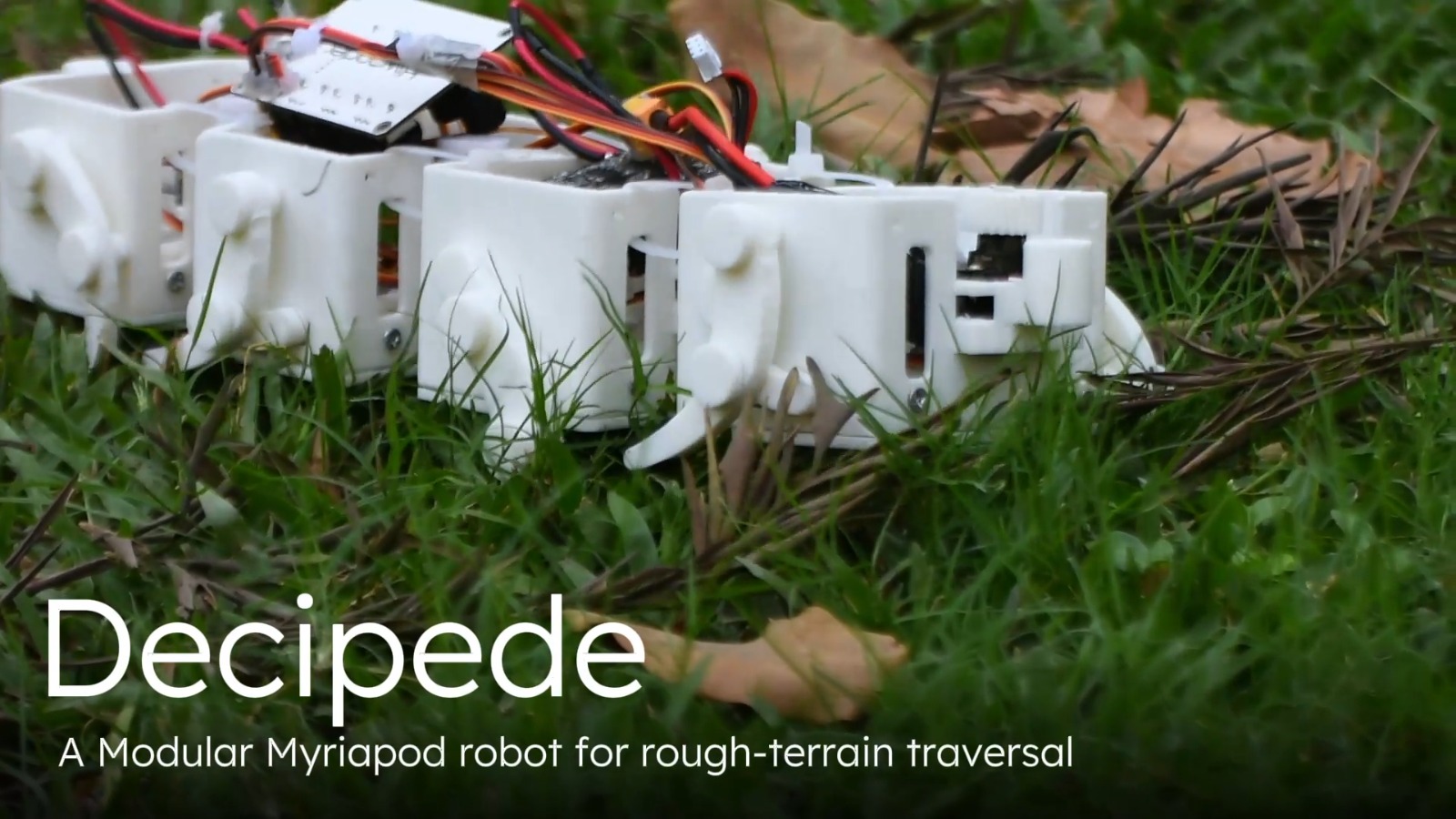
Decipede (Flexipede)
Bio-inspired Modular Myriapod Robot for Rough-Terrain Traversal
A modular robot inspired by centipede and millipede locomotion, designed for adaptive traversal of rough and unstructured terrain. Each segment responds independently to obstacles, enabling coordinated undulatory gait patterns. In 2025, Decipede earned two international honors: a Silver Medal at the World Invention Creativity Expo (WICE) in Malaysia and 4th place at the Global Robotics and Innovation Challenge (GRIC) in Turkey.
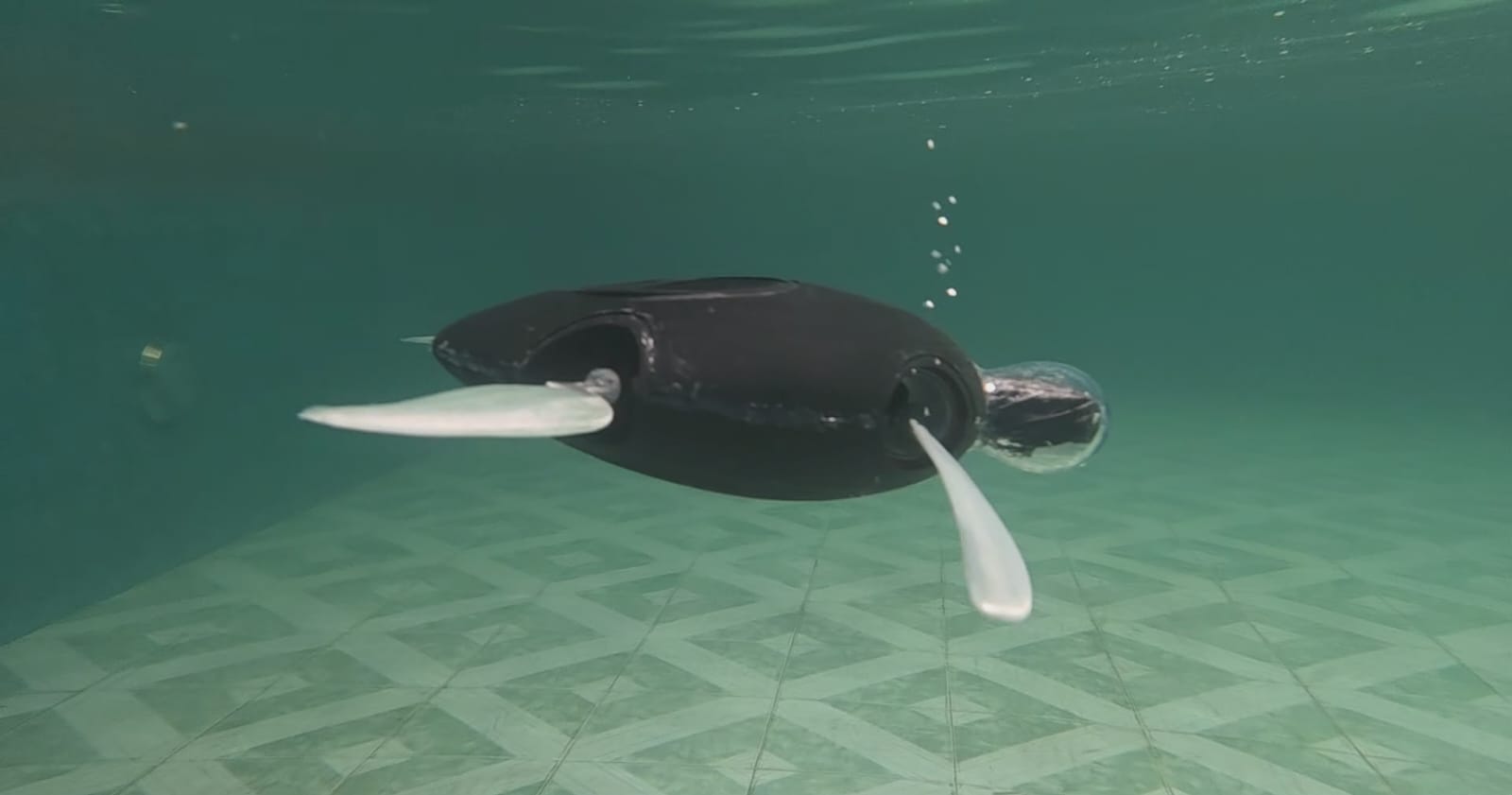
TurtleBot
Sea Turtle-Inspired Underwater Exploration Robot
An underwater exploration robot designed around the biomechanics of sea turtle locomotion, using bio-inspired flipper actuation for efficient underwater navigation. Won the Champion title at Robotronics Fest 2025. Funded by the ICT Division Innovation Fund, Bangladesh, as part of the smart biomimetic robots for underwater operations research grant.
Thinking Like a Botanist
Challenging Multimodal Language Models with Intent-Driven Chain-of-Inquiry
We introduce PlantInquiryVQA, a benchmark of 24,950 expert-curated plant images and 138,068 question-answer pairs for multi-step, intent-driven visual reasoning in botanical diagnosis. We formalize a Chain-of-Inquiry (CoI) framework that models expert diagnostic trajectories as ordered question-answer sequences conditioned on grounded visual cues and three epistemic intents — diagnosis, prognosis, and management. Evaluations on top-tier MLLMs show that structured, question-guided inquiry significantly improves diagnostic correctness and reduces hallucination. Accepted at ACL 2026 (Findings).
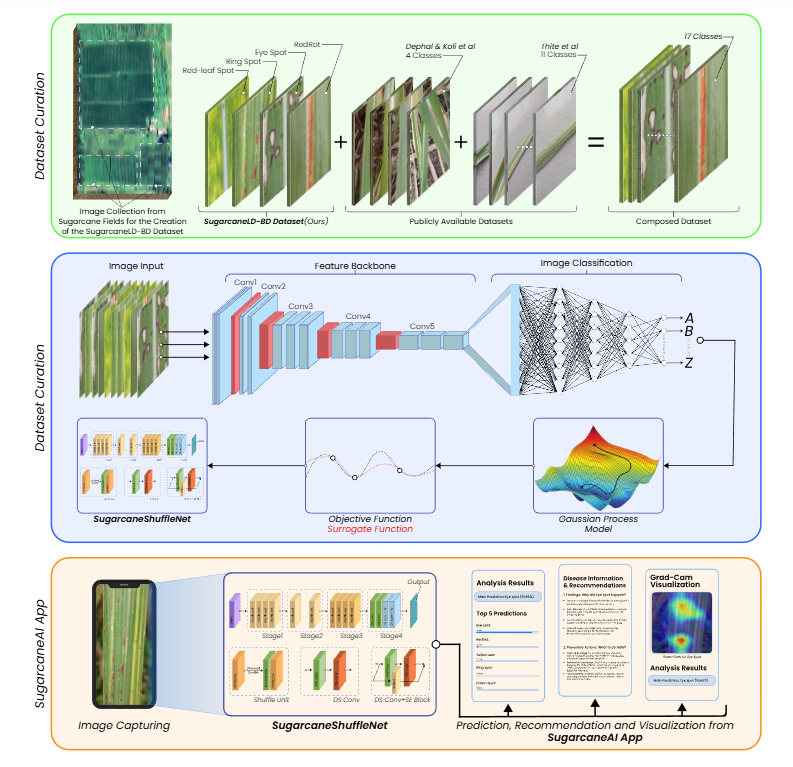
SugarcaneShuffleNet
AI for Sugarcane Leaf Disease Diagnosis
The SugarcaneAI app for diagnosis of 15 prominent sugarcane leaf diseases using SugarcaneShuffleNet, a lightweight CNN optimized for mobile deployment in field conditions.
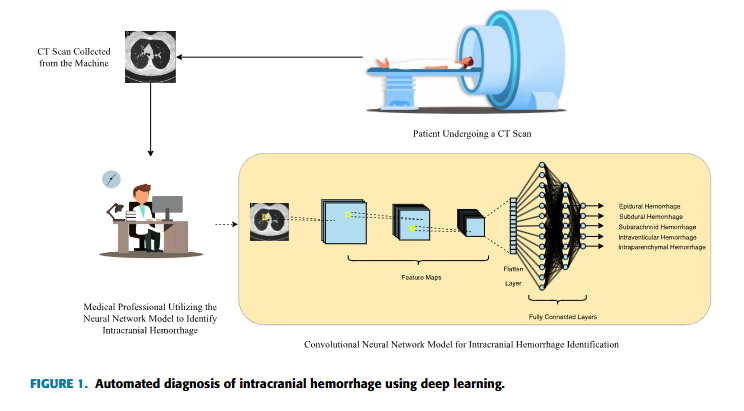
Intracranial Hemorrhage Classification
Deep Learning and Bayesian Optimization on CT Scans
Intracranial Hemorrhage classification from CT scans using deep learning and Bayesian Optimization for robust, hyperparameter-tuned medical image analysis.
Research Portfolio
Artificial Intelligence in Healthcare
- 1.AI for COVID-19 Diagnosis from X-ray Images→
- 2.AI for Intracranial Hemorrhage Diagnosis from CT Scans→
- 3.AI for Histological Cancer Cell Detection from Tissue Image
- 4.AI for Retinal Disease Diagnosis from OCT Images
Artificial Intelligence in Agriculture
- 1.AI for Sugarcane Leaf Disease Diagnosis from Mobile Images
- 2.AI for Banana Leaf Disease Diagnosis from Mobile Images (BananaSqueezeNet)→
- 3.AI for Mango Leaf Disease Diagnosis from Mobile Images→
- 4.AI for Diverse Crop Leaf Diagnosis from Mobile Images (PlantCareNet)→
- 5.AI for Cotton Seedling Monitoring and Growth Stage Classification
Artificial Intelligence in Nanophotonics
Research Grants
Deep Learning and XAI for Interpretable Microscopic Tissue Image Analysis for Cancer Diagnosis
Ministry of Science and Technology, Bangladesh
Building Smart Biomimetic Robots for Underwater Operations
ICT Innovation Fund, ICT Division, Bangladesh
Rapid Assessment of Plant Responses to Climate-Induced Stress Using AI
University Grants Commission of Bangladesh
SmartPDE: Deep Learning Based Plant Disease Epidemiology and Forecasting
University Grants Commission of Bangladesh
Awards
Dhaka University Research Excellence Award 2025
2025- •One of the youngest awardees, recognised for impactful peer-reviewed research contributions.
Dean's Award 2023 and 2025
2023, 2025- •One of the youngest awardees and only lecturer to win twice, recognising research, mentorship and co-curricular contribution.
Provost Award 2025
2025- •Received the Provost Award for securing first position in the MSc programme with a CGPA of 3.98 and the highest marks.
Special Merit Award and Distinction
2024- •Received the award for securing the second highest score among 58 faculty members in the 14 day Foundation in University Teaching and Learning training and was one of the youngest participants.
Education
MSc, Robotics & Mechatronics Engineering
University of Dhaka
Thesis: Algorithms for Fast and Efficient Neural Architecture Search
First position · CGPA 3.98 · Provost Award (2025)
BSc, Robotics & Mechatronics Engineering
University of Dhaka
Thesis: Deep Learning in Medical Image Analysis
Teaching
Undergraduate and graduate courses.
Artificial Intelligence
- Artificial Intelligence
- Machine Learning
- Neural Networks and Deep Learning
Robotics & Programming
- Human–Robot Interaction
- Introduction to Robotics
- Fundamentals of Programming
- Object Oriented Programming
Mechatronics
- Advanced Mechatronics Engineering
- Programmable Logic Controller
- Engineering Drawing
Collaborations
- 1.Ecology Lab, Dept. of Botany, University of Dhaka
- 2.GIS & Remote Sensing Lab, Gazipur Agricultural University
- 3.Dept. of Geology, University of Dhaka
- 4.Nymph Solutions Ltd, Dhaka, Bangladesh
- 5.Attensys AI Limited, Dhaka, Bangladesh